How Gaming Can Build Real-World Skills (And How Parents Can Support It Safely)
For many parents, video games can feel like a mysterious world—one filled with bright screens, fast reactions, online friends, and endless hours in a bedroom. But while gaming can become unhealthy without boundaries, it can also be an incredibly rich and educational environment when guided with intention.
The truth is, video games offer more than entertainment. They help children develop cognitive skills, emotional resilience, communication strategies, and problem-solving abilities. When parents learn to support gaming safely, it becomes a meaningful part of a child’s development rather than a battle of limits and frustration.
Here’s how gaming can build real-world skills—and how parents can play a positive role.
1. Gaming Builds Problem-Solving and Critical Thinking
Many games require players to:
- make quick decisions
- adjust strategies
- solve puzzles
- predict outcomes
- evaluate risks
These are not passive activities—kids are actively thinking, experimenting, and adjusting. Strategic games, cooperative missions, and story-based challenges often mirror the same thinking skills children need in academics and real life.
Parent tip:
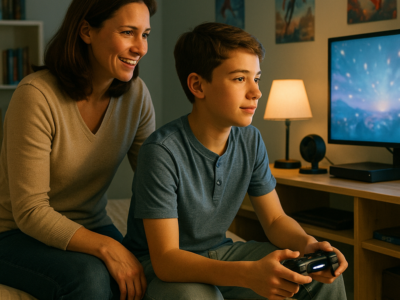
Ask your child how they solved a difficult part of the game. This shows interest and gives you a window into their thinking process.
2. Gaming Strengthens Communication and Teamwork
Online multiplayer games—even the silly or chaotic ones—require communication and collaboration.
Kids often learn to:
- negotiate roles
- plan strategies
- give and receive feedback
- work with different personalities
- handle frustration with teammates
These are foundational social skills, especially for kids who struggle with face-to-face communication. For some, gaming becomes a safe and comfortable way to practice teamwork.
Parent tip:
Ask, “Who do you like playing with and why?” This helps you understand their social world.
3. Gaming Teaches Persistence and Resilience
Video games are built on challenge. Kids fail constantly—but in gaming, failure doesn’t shut them down.
Instead, it teaches:
- persistence
- adaptability
- patience
- willingness to try again
These are the exact traits that support academic success, emotional growth, and healthy coping mechanisms.
Parent tip:
If your child overcomes a tough level, celebrate the effort:
“I love how you kept trying—that’s a skill that will help you everywhere.”
4. Gaming Encourages Creativity
Many games allow kids to:
- build worlds
- design characters
- create stories
- customize structures
- experiment with art and mechanics
Games like Minecraft, Roblox, and other open-world platforms fuel creativity, imagination, and innovative thinking.
Parent tip:
Ask to see something your child has built. This opens natural, low-pressure conversation.
5. Gaming Helps Kids Connect Socially
For many children—especially introverted, anxious, or neurodivergent kids—gaming is a space where they feel confident, included, and capable.
Games create communities grounded in:
- shared interests
- collaboration
- communication
- belonging
Parents may worry that these friendships are “not real,” but many children form long-lasting, supportive connections through online play.
Parent tip:
Talk about online safety, but also ask about the friendships. Showing respect for their social world builds trust.
How Parents Can Support Gaming Safely and Effectively
Gaming becomes healthy when boundaries and connection sit alongside the fun.
1. Set time limits together, not unilaterally
Kids respond better when they participate in the decisions.
2. Encourage breaks, hydration, and movement
Healthy habits keep gaming balanced.
3. Keep gaming spaces open and visible when possible
This builds trust and ensures safety without hovering.
4. Talk openly about online interactions
Teach kids to recognize unsafe conversations or pressure from peers.
5. Use gaming as a bridge, not a barrier
When you show interest, your child sees gaming as something shared—not something that isolates them.
Gaming Isn’t the Opposite of Learning—It Can Be Part of It
With the right guidance, video games become:
- a place for creativity
- a space to build friendships
- a training ground for problem-solving
- a tool for resilience
- a way for families to connect
When parents move from worry to curiosity, gaming becomes an opportunity—not an obstacle—to strengthen the parent-child relationship.