How to Connect With Your Child If They Love Video Games and Spend a Lot of Time in Their Room
Many parents worry when their children spend long hours in their room playing video games. It can feel like the door closes and the connection closes with it. But for many kids and teens, gaming isn’t isolation—it’s community, creativity, challenge, and stress-relief. The goal isn’t to pull them away from the things they enjoy, but to learn how to meet them inside their world and build connection from there.
Connecting with a gaming-focused child is absolutely possible—and often easier than parents expect. It just takes curiosity, patience, and a willingness to see video games through their eyes. Here are practical ideas to help bridge that gap and strengthen your relationship.
1. Show Interest in the Games They Play
You don’t need to love video games to ask simple, meaningful questions like:
- “What are you working on in that game right now?”
- “What’s your favorite part about this game?”
- “Who do you play with?”
- “What makes it fun for you?”
These questions communicate:
“I care about you, so I care about what you enjoy.”
This small effort breaks down defensive walls and opens communication—because kids talk more when they feel understood rather than judged.
2. Let Them Teach You Something
Most kids light up when given the chance to teach a parent how something works—especially something they know well.
Try:
- “Show me how to play one round.”
- “Teach me what the buttons do.”
- “Explain the strategy to me.”
Even 10 minutes of “teach me” time builds trust.
It turns gaming into a shared experience instead of a lonely one.
3. Join Them in the Room Without Taking Over
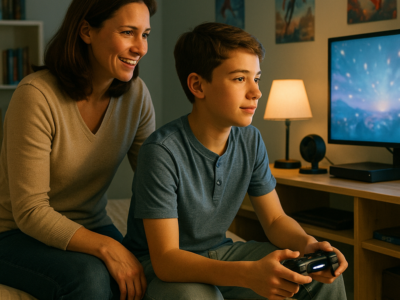
You don’t always have to play the game with them. Sometimes simply being present—folding laundry, reading, or sitting nearby—opens the door for conversation.
When a child sees a parent nearby without pressure or critique, they often start talking naturally:
- about friends
- about school
- about the game
- about stress they’re carrying
Proximity invites communication.
4. Create Small Connection Rituals Outside the Room
While gaming may be their comfort zone, connection can still happen elsewhere—if it’s structured and low-pressure.
Try gentle rituals:
- “Let’s eat lunch together every Saturday.”
- “Walk with me to get the mail.”
- “Let’s pick a show to watch together once a week.”
- “Grab a snack with me before you start gaming.”
Short moments, consistently repeated, create connection that lasts.
5. Use Their Interests as Bridges to Bigger Conversations
Video games offer natural entry points into important topics:
- teamwork
- frustration
- perseverance
- strategy
- dealing with failure
- online safety
- peer pressure
For example:
- “How do you deal with someone who’s rude in the game?”
- “What’s the hardest challenge you’ve had to overcome in that game?”
- “Have you ever felt pressured to do something in a game you didn’t want to do?”
These conversations feel natural because they grow out of something your child cares about.
6. Set Healthy Boundaries Together
Instead of enforcing strict limits with no input, ask:
- “How much gaming time feels reasonable on school days?”
- “What breaks do you think help you perform better?”
- “Where do you want your phone or controller to sleep at night?”
Kids cooperate more when they help create the boundaries.
7. Remember: Alone Time Isn’t Always a Problem
Many kids play video games to:
- decompress
- reduce anxiety
- connect with friends
- escape overstimulation
- enjoy storytelling or creativity
Private time doesn’t necessarily mean emotional distance.
The key is making sure the relationship remains open, warm, and dependable.
Connection Comes From Curiosity, Not Control
When parents approach their gaming child with curiosity instead of criticism, doors open. A child who feels respected is far more likely to:
- share their world
- communicate openly
- trust their parents
- seek guidance when challenges arise
Video games don’t have to be a barrier—they can be a bridge.